Running / stretcher bond
Every visible brick is a stretcher, and each course is offset—often by half a brick. It is extremely common on modern cavity-wall and veneer construction.
Answer 03 · Brickwork
Learn two faces—header and stretcher—then follow the repeat across each course.
Find the short brick faces, called headers. No headers usually suggests running or stretcher bond; entire header rows suggest English bond; headers alternating with stretchers in every row suggest Flemish bond.
A brick bond is the repeated arrangement that overlaps masonry units and avoids continuous vertical joints. Some bonds developed to tie thick solid walls together; others are commonly used as patterns in modern veneers. Read what is visible, but do not assume the face alone reveals the entire wall construction.
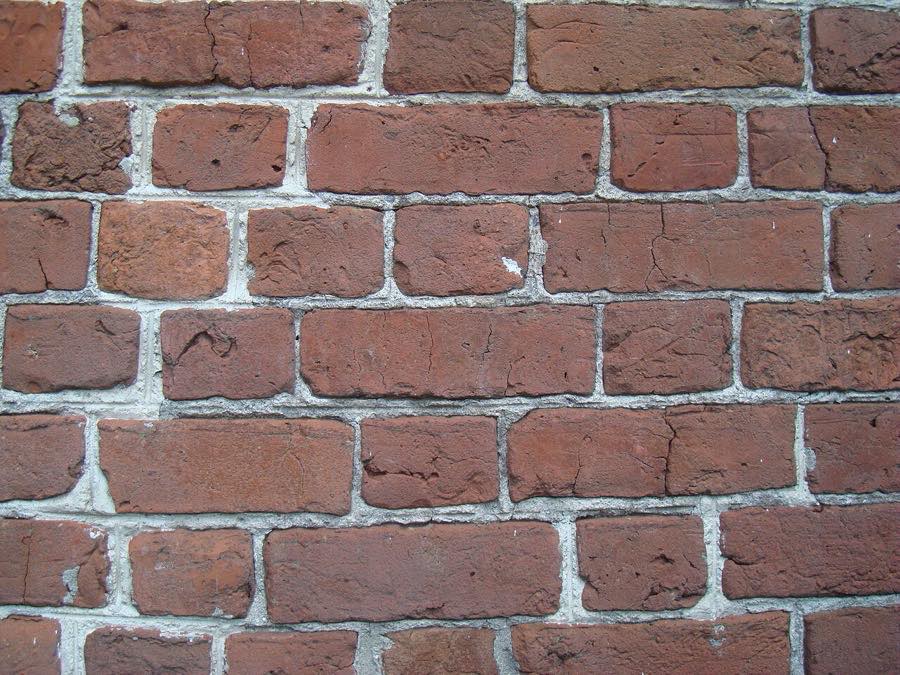
Stand square to the wall and scan one course from left to right. Then compare it with the course above. The location and frequency of headers usually reveal the family of bond.
Every visible brick is a stretcher, and each course is offset—often by half a brick. It is extremely common on modern cavity-wall and veneer construction.
A complete course of headers alternates with a complete course of stretchers. From a distance, the wall reads as distinct long-face and short-face stripes.
Headers and stretchers alternate within each course. The next course shifts the pattern so headers sit over the center of stretchers below.
Bricks align directly above one another, creating continuous vertical joints. Its regular grid is visually distinctive and is typically used with modern reinforced or veneer systems.
| If you see… | The likely bond is… | Check next… |
|---|---|---|
| Only long faces, rows offset | Running / stretcher | Whether the offset is half or one-third brick |
| Whole rows of short faces | English | Alternating stretcher rows above and below |
| Short and long faces in every row | Flemish | Whether every row follows the same alternation |
| Vertical joints line up | Stack | Whether alignment continues across the wall |
Garden-wall bonds reduce the number of headers compared with English or Flemish bond. An English garden-wall pattern commonly inserts one header course after several stretcher courses. A Flemish garden-wall pattern commonly places one header after several stretchers within a course. Names and ratios vary regionally, so describe the visible repeat as well as applying the label.
It can provide supporting evidence, not a date by itself. A bond’s use changes by region, wall thickness, building type, labor tradition, and fashion. Repairs may reproduce an older pattern, while modern veneers can imitate bonds associated with solid masonry.
For dating, combine the bond with brick size and color, mortar joint, window and roof details, construction seams, historic maps, and records. Our guide to telling the age of a building explains how to combine those clues.
Stack bond is usually easiest because every vertical joint lines up. Running bond is also straightforward: each row is offset but every visible brick shows its long face.
English bond alternates full courses of headers with full courses of stretchers. Flemish bond alternates headers and stretchers within each course.
No. The outer face may be a veneer or may use cut or snapped headers for appearance. Establishing wall construction can require drawings, inspection at openings, or professional investigation.