Answer 04 · House history
How old is my house?
The façade gives you the decade. The paper trail gives you the year. Here is the fastest route through both.
Estimate the era from the building itself — brickwork, windows, roof form, and ornament usually place a house within a few decades. Then pin the year with documents: a house appears between two historic map editions, gains occupants in directories and census returns, and enters deeds and local records at construction. Most of these sources are free.
“How old is my house?” is really two questions. Roughly when is a visual question you can answer from the street today. Exactly when is a documentary question, and the trick is to let the visual answer tell you which decade of records to search — it turns an open-ended archive dig into an hour of targeted checking.
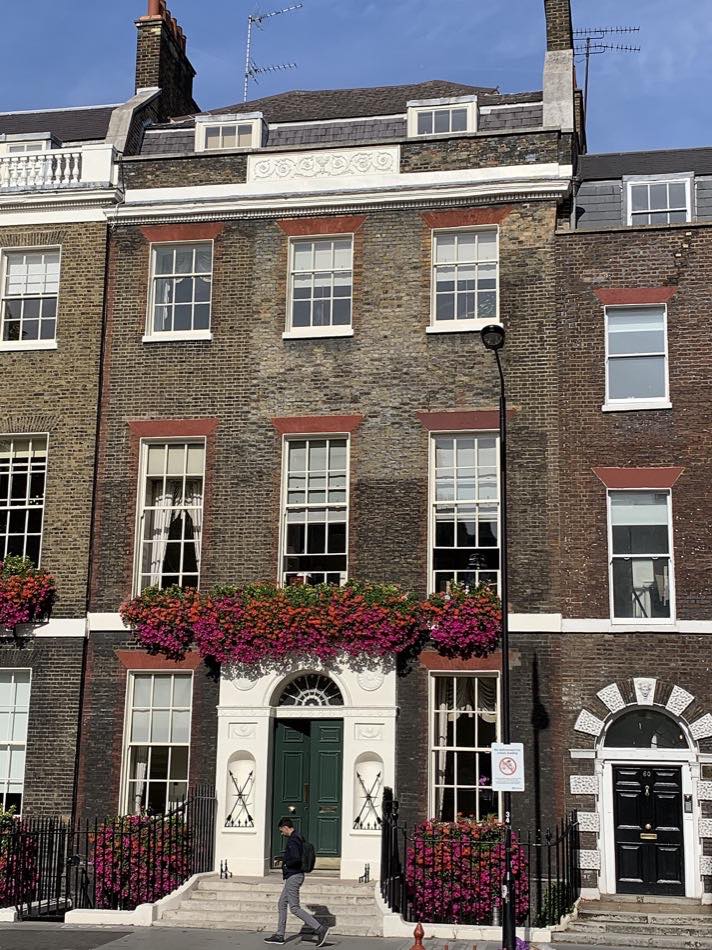
Step one: read the building itself
Nine kinds of visible evidence — brick size and bond, window style, roof pitch, symmetry, materials, ornament, doors, chimneys, and the neighbouring buildings — combine into a reliable era estimate. Our guide to telling the age of a building walks through each clue with photo examples, and the brick-bond guide covers the masonry evidence in detail.
If you'd rather not learn the clues first, photograph the house with an AI analysis app such as Building Lore: it reads the same features from the photo and suggests a likely style and era in seconds. Either way, the goal of step one is a bracket — “probably 1890s–1910s” — not a year.
Step two: five record types that pin the year
| Record | What it tells you | Where to look |
|---|---|---|
| Historic maps | The house appears between two editions — often a 5–10 year window | Free: National Library of Scotland (georeferenced Ordnance Survey, Britain); Sanborn fire insurance maps at the Library of Congress (US towns and cities) |
| Street directories | The address gains a named occupant — construction was usually a year or two earlier | Local libraries and archives; many digitized (Kelly's and county directories in Britain, city directories in the US) |
| Census returns | Confirms the house existed and who lived there at each census date | National archives; publicly released through 1921 (England & Wales) and 1950 (US) |
| Title deeds & land records | The first conveyance describing a built house rather than a plot brackets construction | Land registry or county recorder; your mortgage lender or solicitor may hold copies |
| Planning & building records | Original applications and permits — often the exact date for 20th-century and newer houses | Local authority planning portal or county building department |
The fastest order to check them
- Maps first. Ten minutes with two or three map editions usually converts your visual bracket into a window of a decade or less — for free.
- Directories and census second. First occupancy narrows the window to a year or two.
- Deeds and planning records last. They take the most effort or cost, so use them to confirm, not to explore.
For most houses built after about 1840 in a mapped town, this sequence gets you from “no idea” to a defensible build year in an afternoon. Historic England's guide to researching your home covers the British sources in depth.
Where the records mislead
Three traps catch most first-time researchers. Assessor and property-site dates are estimates: “year built” fields on tax rolls and listing sites are often rounded, and some jurisdictions record an “effective” year that reflects renovation rather than construction. Renumbering breaks the paper trail: streets were commonly renamed and renumbered, so an address vanishing from directories may mean a new number, not a new house. Rebuilding hides in plain sight: a Victorian façade can front an older core, and a “1930s” house may be an older one refronted — which is why the visual evidence and the documents should be read together, not separately.
Common questions
How can I find out when my house was built for free?
Historic map collections are free and usually the fastest single source: the house appears between two editions. Directories, census returns, and local planning portals are free or nearly free and tighten the window to a year or two.
Is the assessor's “year built” accurate?
Treat it as a starting point. It is usually reliable for later 20th-century houses and frequently approximate for older ones, where estimated or rounded dates are common.
Do title deeds show the construction date?
Rarely outright. What they show is the moment the paperwork stops describing a plot and starts describing a house — which brackets construction, often tightly.
Can a photo tell me how old my house is?
It can give a good era estimate, because most dating clues are visible externally. AI photo analysis typically places a house within a few decades; use the records above to confirm the exact year.
Sources and methodology
- Historic England, Researching Your Home's History — the standard documentary route for British houses.
- National Library of Scotland map collections — free georeferenced Ordnance Survey editions.
- Library of Congress, Sanborn Maps collection — detailed US urban mapping from 1867 onward.